Thank you for writing to us. One of our executive will reach back to you through your submitted medium. In case there’s an urgency, feel free to connect over WhatsApp for faster response.
Prefer calling? Dial +9108048033846 (international callers) or 08048033846 (Indian callers).
Extruded rubber products will differ from moulded rubber products based on the process where extruded parts are forced through a die of the required cross section under pressure of an extruder. Often extruded products are unvulcanized prior to being extruded, leaving the rubber in a soft and pliable state post extrusion. If this is indeed the case, the finished extruded products will normally need to be vulcanized before they are rendered usable.
The extrusion process begins with the unvulcanized rubber compound being fed into the extruder. Next, the flutes of the revolving screw will begin to carry the rubber forward into the die, with an increase in pressure and temperature occurring as the material gets closer to the die itself. Once it reaches the die, the built up pressure forces the material through the openings, where it will consequently swell in various degrees based on the material compound and hardness. Because of this tendency towards swelling, many extruded parts require plus or minus tolerances on their cross sections. During the vulcanization, the extruded rubber will well or shrink in both its cross section and its length depending on the type of rubber compound used. After vulcanization, a length of rubber extrusion will tend to be reduced in dimension more in the center of the length than in the ends.
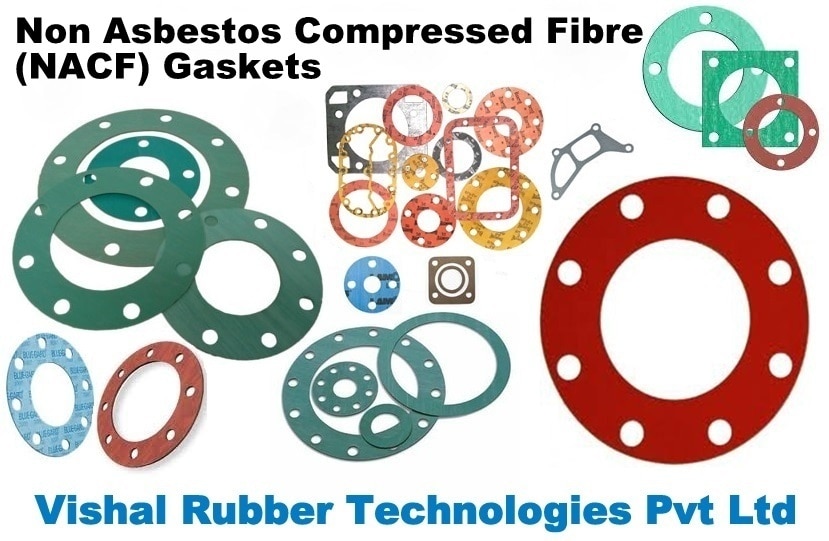
We are one of the largest manufacturers of Gaskets in India. All types of Standard and Non-Standard Gaskets are manufactured. We manufacture Flange & Ring Types of gaskets for all kinds of Water Treatment Plants and Chemical Treatment Plants with Standards like ASME/ANSI (Class 150, Class 300, Class 600, etc), BS10 TD, T-5, T-17, T11, IS 1538, IS 6392, Body Gaskets in all kinds of Brands like Champion Jointing Sheets, Garlock Sheets, Uniklinger, Champion Spitmann, etc.
1) Garlock Blue Gard Style 3000:
Unique blend of aramid fibers, fillers and an NBR rubber binder
Blue color
Min. Temperature: -100°F / -73°C
Max. Temperature: 700°F / 371°C
Continuous Max: 400°F / 205°C
Max Pressure: 1000 PSI / 70 bar
Maximum PxT 1/16: 350,000°F x PSIG / 12,000 bar x °C
Maximum PxT 1/8: 250,000°F x PSIG / 8,600 bar x °C
2) Garlock Blue Gard Style 3200:
Unique blend of aramid fibers, fillers and an SBR rubber binder
Off-white color
Full face or ring
Meets ABS (American Bureau of Shipping) and MIL-DTL-24696C6 Specifications
Min. Temperature: -100°F -73°C
Max. Temperature: 700°F 371°C
Continuous Max: 400°F 205°C
Max Pressure: 1200 PSI 83 bar
Maximum PxT 1/16: 350,000 (°F x PSIG) 12,000 bar x °C
Maximum PxT 1/8: 250,000 (°F x PSIG) 8,600 bar x °C
3) Garlock Blue Gard Style 3300:
Aramid fibers with a neoprene binder
Black color
Min. Temperature: -100°F -73°C
Max. Temperature: 700°F 371°C
Continuous Max: 400°F 205°C
Max Pressure: 1200 PSI 83 bar
Maximum PxT 1/16: 350,000 (°F x PSIG) 12,000 bar x °C
Maximum PxT 1/8: 250,000 (°F x PSIG) 8,600 bar x °C
4) Garlock Blue Gard Style 3400:
Aramid fibers, fillers, and an SBR rubber binder
Grey-black color
Min. Temperature: -100°F -73°C
Max. Temperature: 700°F 370°C
Continuous Max: 400°F 205°C
Max Pressure: 1200 PSI 83 bar
Maximum PxT 1/16: 350,000 (°F x PSIG) 12,000 bar x °C
Maximum PxT 1/8: 250,000 (°F x PSIG) 8,600 bar x °C
5) Garlock Blue Gard Style 3700:
Available in sheet or cut gasket form
Aramid fibers, fillers and an EPDM rubber binder
Light grey color
Min. Temperature: -100°F -73°C
Max. Temperature: 700°F 371°C
Continuous Max: 400°F 205°C
Max Pressure: 1200 PSI 83 bar
Maximum PxT 1/16: 350,000 (°F x PSIG) 12,000 bar x °C
Maximum PxT 1/8: 250,000 (°F x PSIG) 8,600 bar x °C
Champion AF Style 110:
A cost effective product manufactured from ecofriendly natural cellulosic fibres bonded with suitable mix of elastomers.
Colour: Red & Green
Service Conditions:
General purpose gasketing material suitable for use with Oils, Solvents, Gases, Water, L.P.Steam and most dilute acids and alkalies (Low service conditions).
MAX. OPERATING PRESSURE
25 bars
MAX. SHORT TERM SERVICE TEMP.
300oC
MAX. CONTINUOUS SERVICE TEMP.
250oC
MAX. OPERATION TEMP. FOR STEAM
180oC
Champion AF Style 120:
A compressed synthetic Aramid fibre jointing sheet bonded with elastomers to create a matrix of stability.
Colour: Green
Service Conditions:
Suitable for light industrial applications.
Media : Water, Gases, Medium pressure Steam, Dilute Acids/Alkalies (Medium Service Conditions).
MAX. OPERATING PRESSURE
50 bars
MAX. SHORT TERM SERVICE TEMP.
400oC
MAX. CONTINUOUS SERVICE TEMP.
250oC
MAX. OPERATION TEMP. FOR STEAM
200oC
Champion AF 139 High Pressure:
A high quality jointing sheet based on synthetic Aramid fibres bonded with NBR elastomer.
Colour: Orange
Service Conditions:
Suitable for use in applications involving hydrocarbons such as oils and solvents, steam, gases, glycols and aqueous solutions. (Medium Service Conditions).
MAX. OPERATING PRESSURE
80 bars
MAX. SHORT TERM SERVICE TEMP.
450oC
MAX. CONTINUOUS SERVICE TEMP.
250oC
MAX. OPERATION TEMP. FOR STEAM
200oC
Champion AF 154 Super:
A superior performance compressed jointing sheet incorporating a blend of special heat resisting Aramid fibres with a high quality nitrile elastomer binder.
Colour: Yellow
Service Conditions:
Suitable for use with Oils, Solvents, Gases, Steam, Dilute Acids and alkalies. (High Service Conditions).
MAX. OPERATING PRESSURE
150 bars
MAX. SHORT TERM SERVICE TEMP.
450oC
MAX. CONTINUOUS SERVICE TEMP.
250oC
MAX. OPERATION TEMP. FOR STEAM
250oC
Champion AF 154 Metallic - Wire Reinforced:
A superior performance compressed jointing sheet incorporating a blend of special heat resisting Aramid fibres with a high quality nitrile elastomer binder.
Service Conditions:
Suitable for use with Oils, Solvents, Gases, Steam, Dilute Acids and alkalies. (High Service Conditions).
Champion AF 159 Oil :
A Premium grade jointing sheet based on special synthetic Aramid fibres bonded with nitrile elastomer.
Colour: Grey
Service Conditions:
A universal grade suitable for many industrial sealing applications. Media : Hot oils, fuels, Hydrocarbons and refrigerants. (High Service Conditions)
MAX. OPERATING PRESSURE
150 bars
MAX. SHORT TERM SERVICE TEMP.
400oC
MAX. CONTINUOUS SERVICE TEMP.
250oC
MAX. OPERATION TEMP. FOR STEAM
250oC
Champion AF 160 Acid:
A top quality acid resistant compressed synthetic Aramid fibre jointing sheet bonded with special binders
Colour: Cream
Service Conditions:
Acid resistant grade. Recommended for use against hot, Concentrated organic/inorganic/mineral acids.
MAX. OPERATING PRESSURE
150 bars
MAX. SHORT TERM SERVICE TEMP.
250 oC
MAX. CONTINUOUS SERVICE TEMP.
210 oC
MAX. OPERATION TEMP. FOR STEAM
210 oC
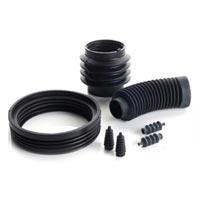
Rubber Bellows and boots are an essential part of many different industrial systems. They are flexible seals used in a range of applications for sealing dust and other environmental elements in applications with a calculated range of motion. Vishal Rubber Technologies Pvt. Ltd. fabricates rubber bellows and boots using compression moulding utilizing the most recent rubber compounds available. Each of these methods has certain attributes that would be relevant based on the criteria of the application.
Our custom rubber bellows and boots are designed to protect against :
Dust
Water
Oil
Grease
Acids
Bleaches
Spatter and pressure
Moisture
Chemicals
UV
Other environmental elements
Rubber Bellows/Boots/Expansion Bellows are also manufactured from over 15 polymers including: Nitrile / Buna-N (NBR), Fluorocarbon (Viton®, Fluorocarbon (FKM), Silicone (VMQ), Fluorosilicone (FVMQ), Polyurethane (AU/EU), Natural Rubber (NR), Ethylene Propylene (EPDM), Hydrogenated Nitrile Rubber (HNBR), Styrene Butadiene Rubber (SBR), Chloroprene (Neoprene®), etc.
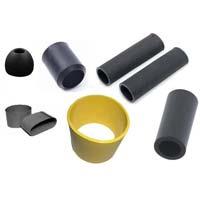
A Sleeve is a basic type of coupling. This consists of a pipe whose bore is finished to the required tolerance based on the shaft size. Rubber Sleeves and buffers can be manufactured in a range of shapes, sizes and material to suit the application. Rubber Sleeves can be used for variety of applications such as covering joints, insulation in different mechanical parts and electrical applications, covering hoppers, etc.
Sleeves are also manufactured from over 15 polymers including: Nitrile / Buna-N (NBR), Fluorocarbon (Viton®, Fluorocarbon (FKM), Silicone (VMQ), Fluorosilicone (FVMQ), Polyurethane (AU/EU), Natural Rubber (NR), Ethylene Propylene (EPDM), Hydrogenated Nitrile Rubber (HNBR), Styrene Butadiene Rubber (SBR), Chloroprene (Neoprene®), etc.
Tri – Clamp / Tri – Clover Gaskets:
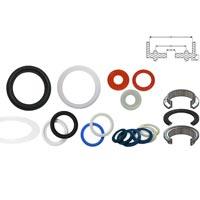
A Tri Clover Compatible Clamp and Gasket along with a pair or Tri Clover fittings is required to make a complete connection. Tri clover Tri clamp gaskets in four different materials:
Silicone: Silicone gaskets have a very wide temperature range of -58ºF to 446ºF making them suitable for a wide range of applications and great for home brewing locations where they will be near flame or in heat wash. They are very flexible and relatively soft making them easy to work with and seal. They can get gummy over time when used with strong acids and caustics in commercial applications. Silicone brewery gaskets are translucent clear.
EPDM: EPDM gaskets have a narrower temperature range than silicone (-30ºF to 300ºF) but stand up to stronger acids and caustics than silicone making them more desirable in commercial applications and excellent for home brewery applications. EPDM gaskets are relatively soft, easy to seal and probably the best all around choice for any application that doesn't need to live close to a flame source. EPDM gaskets are black.
PTFE: PTFE Teflon gaskets have the widest temperature range (-100ºF to 500ºF) and are also the hardest making them ideal for locations that need to rotate against each other like racking arms. (Never rotate or loosen a connection that is holding back hot liquid!) Being hard, they are somewhat more difficult to get a good seal. PTFE gaskets are solid white.
BUNA-N: BUNA-N gaskets have a fairly narrow temperature range (-30ºF to 200ºF) but remain flexible across that range and seal well. They do not do well with acid or caustic cleaners and should be kept away from UV light where they can oxidize. BUNA-N gaskets are a good choice for the fermentation side of a brewery where their low cost makes them nearly disposable. Black in color.
NEW! We just recently added flanged tri clover tri clamp gaskets to our line. We have manufactured these gaskets having a thin flange around the outer circumference of the gasket. This flange holds the gasket in place on one of the two fittings which makes for much easier handling and connection.
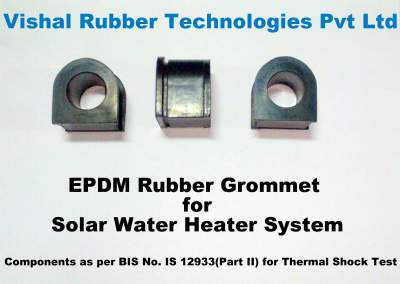
We manufacture and Supply UL 94 EPDM Rubber Orings and Rubber Parts
From Lowest (Least Flame - Retardant) to Highest (Most Flame - Retardant).
Standards are given below for details about its details of testing,
UL 94-5VA
UL 94-5VB
UL 94 V-0
UL 94 V-1
UL 94 V-2
UL 94 H-B
HB: slow burning on a horizontal specimen; burning rate < 76 mm/min for thickness < 3 mm or burning stops before 100 mm
V-2: burning stops within 30 seconds on a vertical specimen; drips of flaming particles are allowed.
V-1: burning stops within 30 seconds on a vertical specimen; drips of particles allowed as long as they are not inflamed.
V-0: burning stops within 10 seconds on a vertical specimen; drips of particles allowed as long as they are not inflamed.
5VB: burning stops within 60 seconds on a vertical specimen; no drips allowed; plaque specimens may develop a hole.
5VA: burning stops within 60 seconds on a vertical specimen; no drips allowed; plaque specimens may not develop a hole.
Ebonite Nozzles are used in Vaccum Ejector Systems to convert High Pressure to Kinetic Energy - Velocity.
Ejectors use a High Pressure Motive to compress a Low Pressure Suction such as gas or air to dischare an intermediate pressure creating or Kinetic Energy system. In a nozzel, pressure is generated at upstream of nozzel. Jet of fluid moving faster than fluid within the pipe, emerges from Nozzel. So upstream of the nozzel is high pressure and low velocity and at nozzel discharge low pressure and high velocity is generated. Thus nozzel converts pressure energy to kinetic energy. If we black off the upstream we would see that the air is sucked in from side inlet and discharging from the end of tube providing us a simple divice of pumping air or gases from surrounding(a basic form of ejector). And a diffuser is used to mix both the incoming strems. Once mixed divergent section slows down the mixture further increasing pressure. This feature discharges pressure higher than the suction branch. This makes the ejector compress and boost the pressure of fluid entertained.
This type of system is used in Oil & Gas Industry and also in Water treatment plants.
Pigs With Lips Replaceable:
All the Pigs made in Polyurethane are with replaceable lips. Lips might be made of PU, Viton Rubber, EPDM Rubber as per customer requirements and specifications. Usually Body of Pig is manufactured using Metal, PU Nose/Nylon Nose/ Viton Rubber Nose, etc. Integration of magnetic core can be done.
Foremost important part replaceable/wearing part is Lips, usually made from PU & Viton Rubber.
Various sizes of Pigs are manufactured according to size of Pipe and bends in the pipeline.
Benefits:
*Material Consumption very less compared to traditional Pigs.
* Cost Effective in replacement of parts minimizing time factor.
* Reusable Base Body.
* Cost Effective in manufacturing (overall cost reduction of Pigs).
Functionality:
It can be used bidirectionally within the system. It can only be removed through the system until lips worn out.
Options:
* Different material lips can be used.
* Magnetic Core can be used if necessary for pig detection in the control line.
Rubber Gaskets: There are different types of rubber gaskets used according to purpose and type. Some of the gaskets are Flange and Ring Type Gaskets followed by standards such as ANSI, BS10TD, T-5, T-17, T-11, IS-1538, IS-6392, Body Gaskets, etc.
These gaskets can be manufactured in all types of polymers such as Natural, Butyl, Viton, Silicon, Neoprene, Nitrile, EPDM, Food Grade etc.


 Chat with us
 Chat with us