Thank you for writing to us. One of our executive will reach back to you through your submitted medium. In case there’s an urgency, feel free to connect over WhatsApp for faster response.
Prefer calling? Dial +9108048033846 (international callers) or 08048033846 (Indian callers).
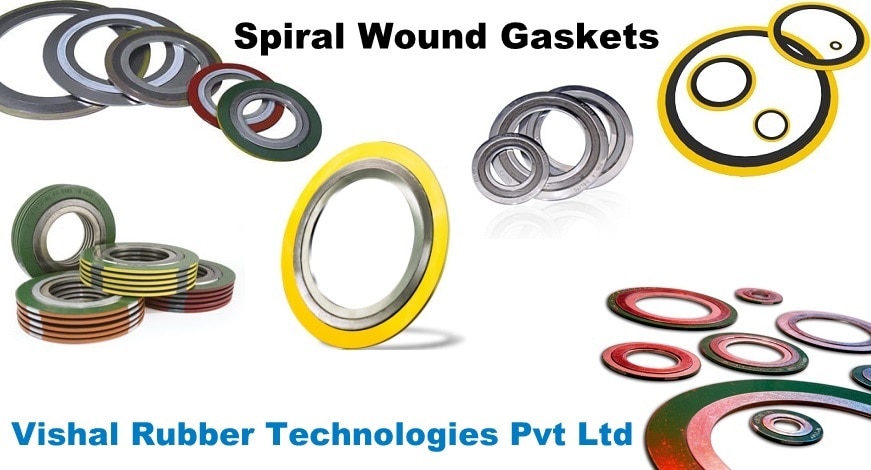
Spiral Wound Gaskets:
Spiral-wound gaskets comprise a mix of metallic and filler material. Generally, the gasket has a metal (normally carbon rich or stainless steel) wound outwards in a circular spiral (other shapes are possible) with the filler material (generally a flexible graphite) wound in the same manner but starting from the opposing side. This results in alternating layers of filler and metal. The filler material in these gaskets acts as the sealing element, with the metal providing structural support.
These gaskets have proven to be reliable in most applications, and allow lower clamping forces than solid gaskets, albeit with a higher cost.
Spiral wound gaskets have proven to be the most reliable sealing element for use in difficult, critical and arduous duties. Spiral wound gaskets are used in Refinery, Petrochemical, Chemical, Steam lines and Process Industries, where they have many advantages over older types of gaskets.
These gaskets are manufactured to International specifications such as BS, API, ASME, DIN.
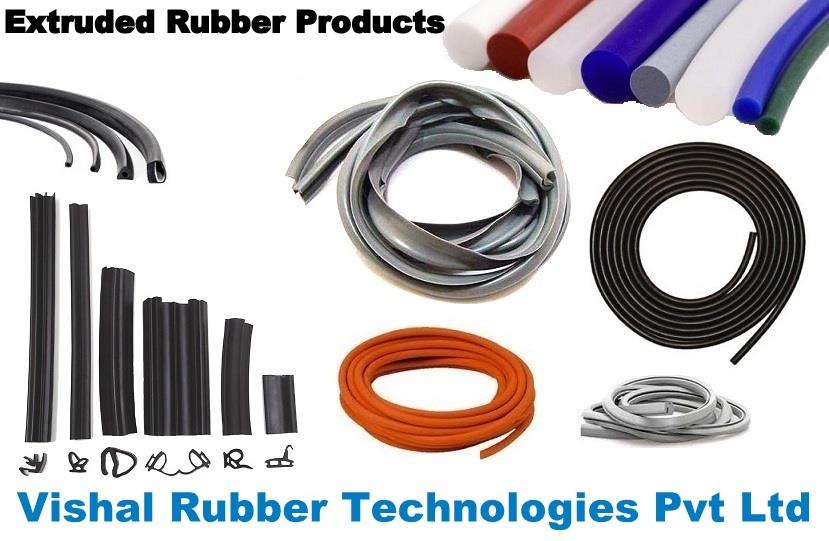
We offer a comprehensive range of extruded Rubber Chords for all applications. These are available in many compounds including Nitrile / Buna-N (NBR), Fluorocarbon (Viton®, Fluorocarbon (FKM), Silicone (VMQ), Fluorosilicone (FVMQ), Natural Rubber (NR), Ethylene Propylene (EPDM), Hydrogenated Nitrile Rubber (HNBR), Styrene Butadiene Rubber (SBR), Chloroprene (Neoprene®), etc. Whether you require just a few meters or much larger quantities we will be delighted to quote for your requirement.
Extruded rubber products will differ from moulded rubber products based on the process where extruded parts are forced through a die of the required cross section under pressure of an extruder. Often extruded products are unvulcanized prior to being extruded, leaving the rubber in a soft and pliable state post extrusion. If this is indeed the case, the finished extruded products will normally need to be vulcanized before they are rendered usable.
The extrusion process begins with the unvulcanized rubber compound being fed into the extruder. Next, the flutes of the revolving screw will begin to carry the rubber forward into the die, with an increase in pressure and temperature occurring as the material gets closer to the die itself. Once it reaches the die, the built up pressure forces the material through the openings, where it will consequently swell in various degrees based on the material compound and hardness. Because of this tendency towards swelling, many extruded parts require plus or minus tolerances on their cross sections. During the vulcanization, the extruded rubber will well or shrink in both its cross section and its length depending on the type of rubber compound used. After vulcanization, a length of rubber extrusion will tend to be reduced in dimension more in the center of the length than in the ends.
We provide excellent varieties of Filter Rubber Gasket to our esteemed clients. Products offered by us are highly appreciated among the customers for their better efficiency, optimum strength and excellent functioning in extreme conditions.
These filter gaskets are used in Irrigation Filters used in Drip Irrigation.
Exclusive PTFE Diaphragm material is a time proven product which is made using best of the technology and material used is offering longest cycle life in the industry which continues to outperform all competitive materials.
These Diaphragms usually used in Pumps which proves to be durable and versatile. Containing high performance PTFE Sheet on the wetted side which in effect they last significantly longer than other conventional diaphragms. These Diaphragms profice dramatic improvement in service life and are considerably stronger, with greater flex life. Excellent chemical resistance makes PTFE Pump Diaphragms extremly versatile. They are suitable for use with most chemicals and in elevated temperatures and pressures, and are ideally suited for general service pumps that are used for a vatiety of pumping tasks.
Benefits:
1. Longer Lasting diaphragms, which is less replacement times.
2. Versatile Diaphragms, which works with most chemicals.
3. Lower Cost, which means maintenance and operating cost reduction
Key Features:
1. Contains high performance PTFE Sheet.
2. Excellent Rib Construction in Diaphragm Designs.
3. Chemically resistant and high temperature resistant.
4. Greater flex life.
An O - Ring is a circular band with circular cross section to arrest leakages between two faces or over shaft and hole. They are designed to be seated in a groove and compressed during assembly between two or more parts, creating a seal at the interface.
O–Rings selection is based on chemical compatibility, service temperature, sealing pressure, lubrication requirements and working atmosphere. Successful o-ring joint design requires a rigid mechanical mounting that applies a predictable deformation to the o-ring.
This introduces a calculated mechanical stress at the o-ring contacting surfaces. As long as the pressure of the fluid being contained does not exceed the contact stress of the o-ring, leaking cannot occur. The seal is designed to have a point contact between the o-ring and sealing faces. This allows a high local stress, able to contain high pressure, without exceeding the yield stress of the o-ring body.
The flexible nature of o-ring accommodates imperfections in the mounting parts. Mostly these O Rings are used to seal hydraulic, pneumatic and wherever sealing is required. We manufacture O-rings, seals and associated components from a wide range of materials, with the shortest lead-times in India.
When mismatching the sealing line and parting line, the sealing performance is improved due to the flash marks. Because there is a mechanical removal of flash is taken place in the sealing line.
The offset parting o-rings is widely used in critical applications. These o-rings are costlier than regular O-rings, because of their construction.
Our continual investment and development of product, personnel and customer satisfaction ensures we remain unrivalled in our field for quality and service.
O-Rings are also manufactured from over 15 polymers including: Nitrile / Buna-N (NBR), Fluorocarbon (Viton®, Fluorocarbon (FKM), Silicone (VMQ), Fluorosilicone (FVMQ), Polyurethane (AU/EU), Natural Rubber (NR), Ethylene Propylene (EPDM), Hydrogenated Nitrile Rubber (HNBR), Styrene Butadiene Rubber (SBR), Chloroprene (Neoprene®), etc.
All types of Natural, EPDM, Nitrile, Neopren, Silicon etc Rubber Sheets available.
In the calendering process, fabric and rubber material is passed through a series of rollers to flatten, smooth and commingle the two or more materials. Calendered sheets can have multiple layers of both the elastomeric and polymer “sandwiched“ together.
Sheeting produced by the calender process is typically divided into two classes: either fabric inserted, or unsupported. Unsupported calender goods contain only layers of rubber or plastic that have been joined without cord, cloth or textile being inserted for strength or tear resistance. Tire cord can be used special cases; rayon, cotton, nylon, or polyester cords are arranged in parallel and bound together by rubber on a calender.
Depending upon intended use and required look or feel, the sheets of rubberized fabric are then smoothed, glazed, polished, or given a moiré or embossed surface. The resulting surface characteristics depend on the pressure exerted by the rollers, on their temperature, composition, and surface designs, and on the type of coating or glaze previously applied to the material to be calendered. Following the calendering process the material is then wound into rolls and placed into storage.
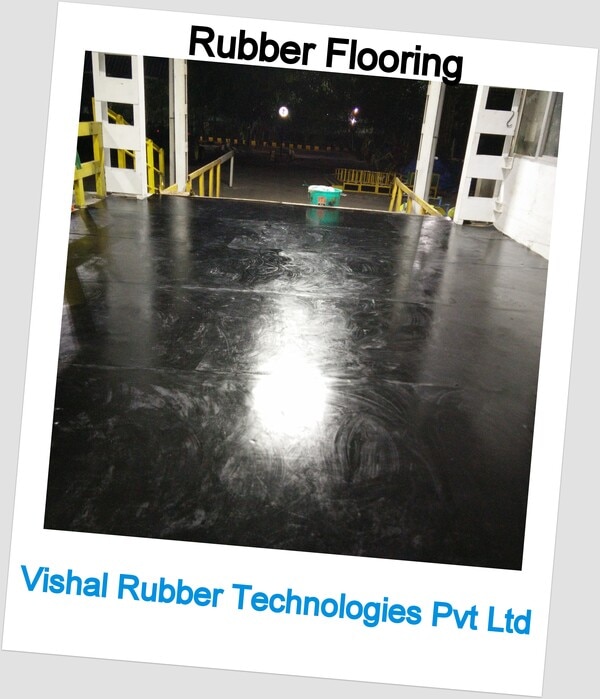
Rubberized Flooring using Conveyor Belts for better rigidity and longer life instead of usual Rubber Mats. Usually Conveyor belt used is 5mm thk with 2 ply fabric inserted for wear and tear resistance. Rubber Sheets used can be of higher thickness as per Customer requirements. Process involves following steps: 1. Epoxy Scridding for leveling uneven surfaces. 2. Application of Rubber Conveyor Belts to the Epoxy Scrid floor using specially developed primer and epoxy bonding agent. 3. Filling of Gaps between the Conveyor Belts.
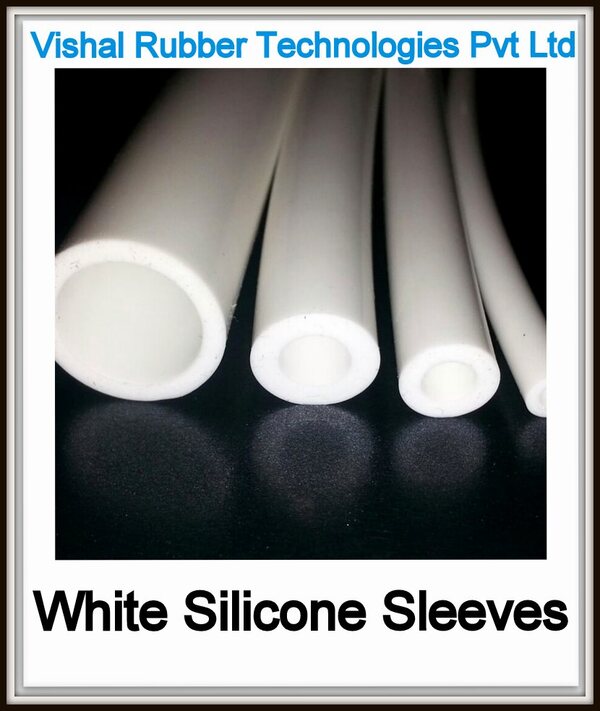
We manufacture White Silicon Rubber Sleeves or Tubes basically to suite its asthetic look in wide industrial applications like home appliances, Chemical Industry, Pharma Sector, Food Industry, Cables, Machine Manufacturers, Medical Machine applications, X-ray machines components, Solar Industry, Water Treatments, etc.
We manufacture Silicon Extruded Tubes and Sleeves as per customer specifications and applications.


 Chat with us