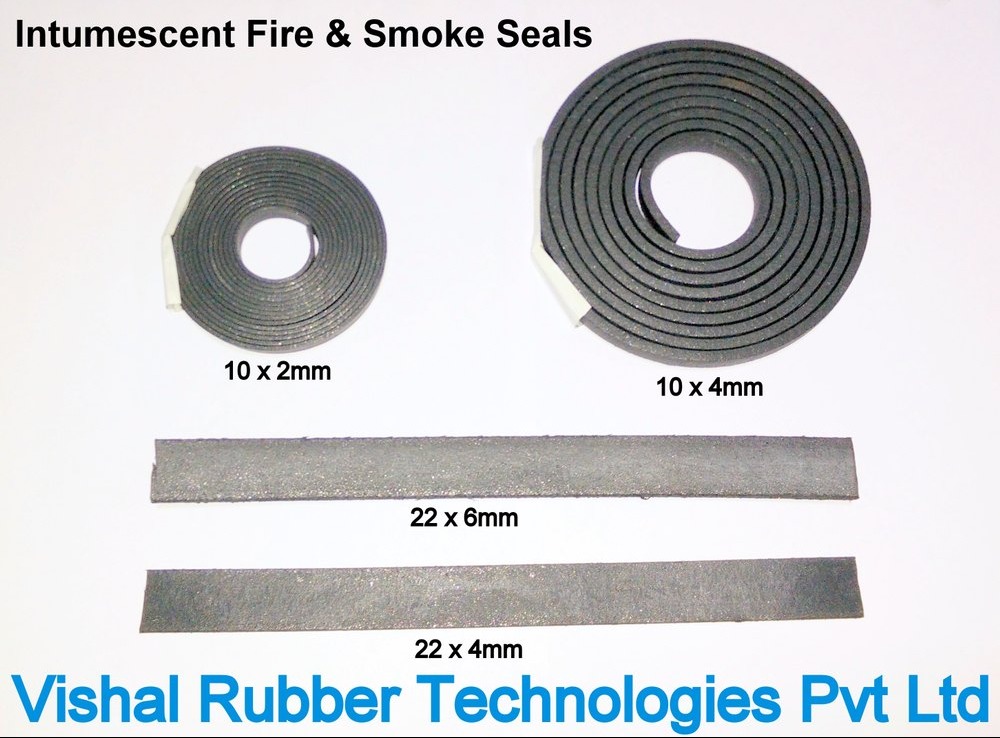
Fire intumescent rubber smoke seals form part of a passive fire-protection strategy. They are typically installed around fire-rated doors and selected openings to help restrict the movement of smoke and hot gases. When exposed to elevated temperatures, the intumescent element expands and helps close gaps that could otherwise allow fire and smoke to spread.
These seals should not be viewed as standalone fire-protection products. Their performance is connected to the complete tested assembly, including the door leaf, frame, hardware, glazing, installation method and surrounding construction.
The Difference Between Smoke Control and Intumescent Action
Smoke control and intumescent expansion perform related but distinct functions.
A smoke seal is intended to limit the passage of smoke through the clearance around a closed door under specified conditions. It commonly uses a flexible blade, fin or compressible sealing section that maintains contact between the door and frame.
An intumescent material responds to heat. As the temperature rises, it expands to occupy gaps created by burning, deformation or the loss of other materials. This expanded layer can help slow the passage of flames and hot gases.
Combination products may integrate both functions. However, their suitability must be established through relevant fire and smoke test evidence rather than appearance alone.
Where These Seals Are Commonly Used
Pune has a growing mix of commercial, industrial, residential and institutional developments. Fire and smoke seals may be specified for:
- Office buildings
- Hospitals and healthcare facilities
- Hotels and hospitality projects
- Educational institutions
- Shopping centres
- Warehouses
- Industrial facilities
- Apartment buildings
- Data centres
- Public infrastructure
Their exact use depends on the building’s fire strategy, door schedule and applicable project specifications.
Key Factors That Influence Seal Selection
Several products may look similar while having different tested capabilities. Project teams should evaluate the following before procurement:
- Intended door type and material
- Required fire-resistance period
- Smoke-control requirement
- Seal dimensions
- Groove size and installation position
- Tested orientation
- Compatibility with door hardware
- Ambient temperature and humidity
- Required certifications and reports
- Approved adhesive or fixing method
The evidence should relate to the proposed application. A seal tested in one door construction cannot automatically be assumed to provide identical performance in every other assembly.
Installation Quality Matters
Even a suitable fire intumescent rubber smoke seal may underperform if it is incorrectly installed. Common installation concerns include:
- Discontinuous sealing around corners
- Incorrect groove depth
- Loose sections and damaged edges
- Excessive paint covering the seal
- Interference from hinges, locks or closers
- Gaps larger than the tested configuration
- Substitution without technical approval
Installers should follow the door manufacturer’s instructions and the details stated in the supporting test documentation. Seals must fit securely without preventing the door from closing and latching correctly.
Inspection and Maintenance
Fire doors are operational safety components and require periodic checks. During inspection, facilities teams should look for missing sections, cuts, detachment, heavy paint build-up, loss of flexibility and physical damage.
A seal should also be examined after door repairs or hardware replacement. Altering hinges, locks, door closers or edge clearances can affect the overall assembly.
Vishal Rubber Technologies works with buyers and project teams seeking fire intumescent rubber smoke seals for requirements in Pune and across Maharashtra. The manufacturer should be given complete technical specifications, including section size, intended use, required test standard and quantity.
Procurement decisions should be based on verifiable product data and compatibility with the approved fire-door system. This approach helps architects, contractors, fabricators and facility managers avoid unsuitable substitutions while maintaining the intended passive fire-protection design.