Thank you for writing to us. One of our executive will reach back to you through your submitted medium. In case there’s an urgency, feel free to connect over WhatsApp for faster response.
Prefer calling? Dial +918048036916 (International callers) or 8048036916 (Indian callers).
We manufacture all kinds of Silicone Rubber Profiles or Beading as per requirement of shape and sizes. Such silicone rubber profiles are used in wide industrial sector like Automobile, Pharma, Chemical, Heavy Industry, Electrial & Electronics, Irrigation, Agriculture, Food, etc.
We manfuacture such silicone rubber profiles as per customer specifications from small quantities to large quantity requirements with simple to complex profiles.
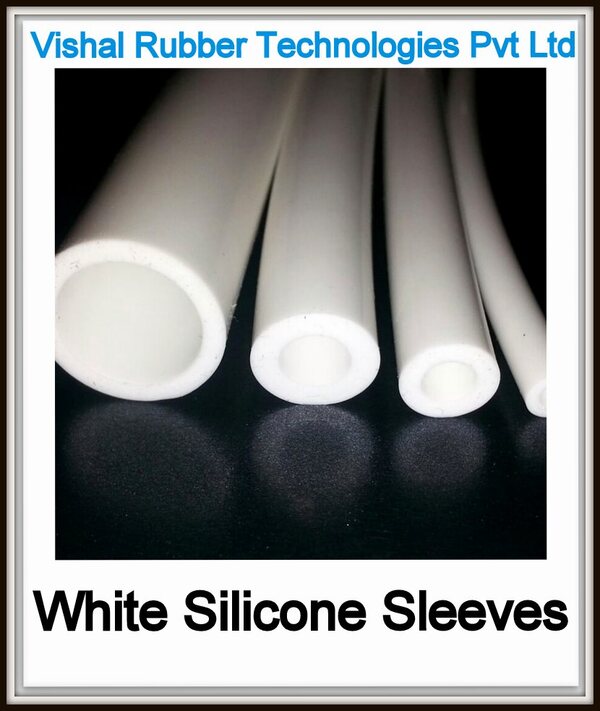
We manufacture White Silicon Rubber Sleeves or Tubes basically to suite its asthetic look in wide industrial applications like home appliances, Chemical Industry, Pharma Sector, Food Industry, Cables, Machine Manufacturers, Medical Machine applications, X-ray machines components, Solar Industry, Water Treatments, etc.
We manufacture Silicon Extruded Tubes and Sleeves as per customer specifications and applications.
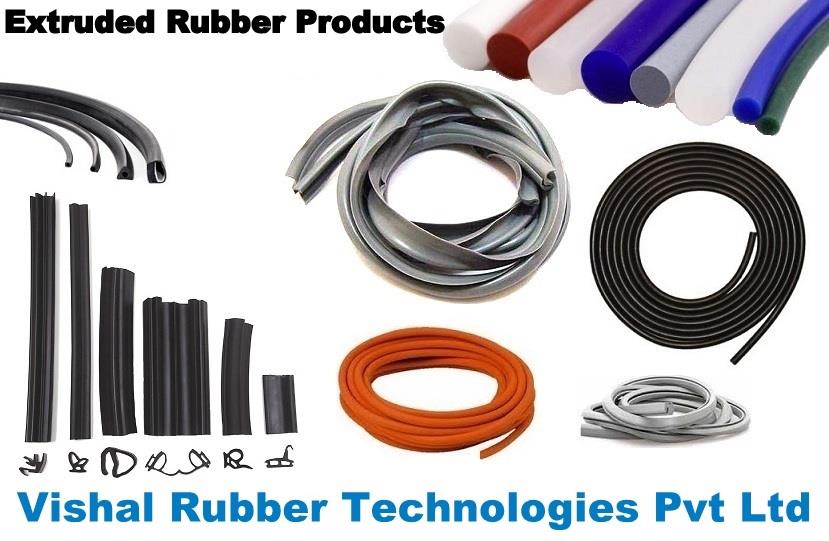
We offer a comprehensive range of extruded Rubber Profiles and tubing for all applications. These are available in many compounds including Nitrile / Buna-N (NBR), Fluorocarbon (Viton®, Fluorocarbon (FKM), Silicone (VMQ), Fluorosilicone (FVMQ), Natural Rubber (NR), Ethylene Propylene (EPDM), Hydrogenated Nitrile Rubber (HNBR), Styrene Butadiene Rubber (SBR), Chloroprene (Neoprene®), etc. Whether you require just a few meters or much larger quantities, we will be delighted to quote for your requirement.
Extruded rubber products will differ from moulded rubber products based on the process where extruded parts are forced through a die of the required cross section under pressure of an extruder. Often extruded products are unvulcanized prior to being extruded, leaving the rubber in a soft and pliable state post extrusion. If this is indeed the case, the finished extruded products will normally need to be vulcanized before they are rendered usable.
The extrusion process begins with the unvulcanized rubber compound being fed into the extruder. Next, the flutes of the revolving screw will begin to carry the rubber forward into the die, with an increase in pressure and temperature occurring as the material gets closer to the die itself. Once it reaches the die, the built up pressure forces the material through the openings, where it will consequently swell in various degrees based on the material compound and hardness. Because of this tendency towards swelling, many extruded parts require plus or minus tolerances on their cross sections. During the vulcanization, the extruded rubber will well or shrink in both its cross section and its length depending on the type of rubber compound used. After vulcanization, a length of rubber extrusion will tend to be reduced in dimension more in the center of the length than in the ends.
We offer a comprehensive range of extruded Rubber Chords for all applications. These are available in many compounds including Nitrile / Buna-N (NBR), Fluorocarbon (Viton®, Fluorocarbon (FKM), Silicone (VMQ), Fluorosilicone (FVMQ), Natural Rubber (NR), Ethylene Propylene (EPDM), Hydrogenated Nitrile Rubber (HNBR), Styrene Butadiene Rubber (SBR), Chloroprene (Neoprene®), etc. Whether you require just a few meters or much larger quantities we will be delighted to quote for your requirement.
Extruded rubber products will differ from moulded rubber products based on the process where extruded parts are forced through a die of the required cross section under pressure of an extruder. Often extruded products are unvulcanized prior to being extruded, leaving the rubber in a soft and pliable state post extrusion. If this is indeed the case, the finished extruded products will normally need to be vulcanized before they are rendered usable.
The extrusion process begins with the unvulcanized rubber compound being fed into the extruder. Next, the flutes of the revolving screw will begin to carry the rubber forward into the die, with an increase in pressure and temperature occurring as the material gets closer to the die itself. Once it reaches the die, the built up pressure forces the material through the openings, where it will consequently swell in various degrees based on the material compound and hardness. Because of this tendency towards swelling, many extruded parts require plus or minus tolerances on their cross sections. During the vulcanization, the extruded rubber will well or shrink in both its cross section and its length depending on the type of rubber compound used. After vulcanization, a length of rubber extrusion will tend to be reduced in dimension more in the center of the length than in the ends.
Extruded rubber products will differ from moulded rubber products based on the process where extruded parts are forced through a die of the required cross section under pressure of an extruder. Often extruded products are unvulcanized prior to being extruded, leaving the rubber in a soft and pliable state post extrusion. If this is indeed the case, the finished extruded products will normally need to be vulcanized before they are rendered usable.
The extrusion process begins with the unvulcanized rubber compound being fed into the extruder. Next, the flutes of the revolving screw will begin to carry the rubber forward into the die, with an increase in pressure and temperature occurring as the material gets closer to the die itself. Once it reaches the die, the built up pressure forces the material through the openings, where it will consequently swell in various degrees based on the material compound and hardness. Because of this tendency towards swelling, many extruded parts require plus or minus tolerances on their cross sections. During the vulcanization, the extruded rubber will well or shrink in both its cross section and its length depending on the type of rubber compound used. After vulcanization, a length of rubber extrusion will tend to be reduced in dimension more in the center of the length than in the ends.