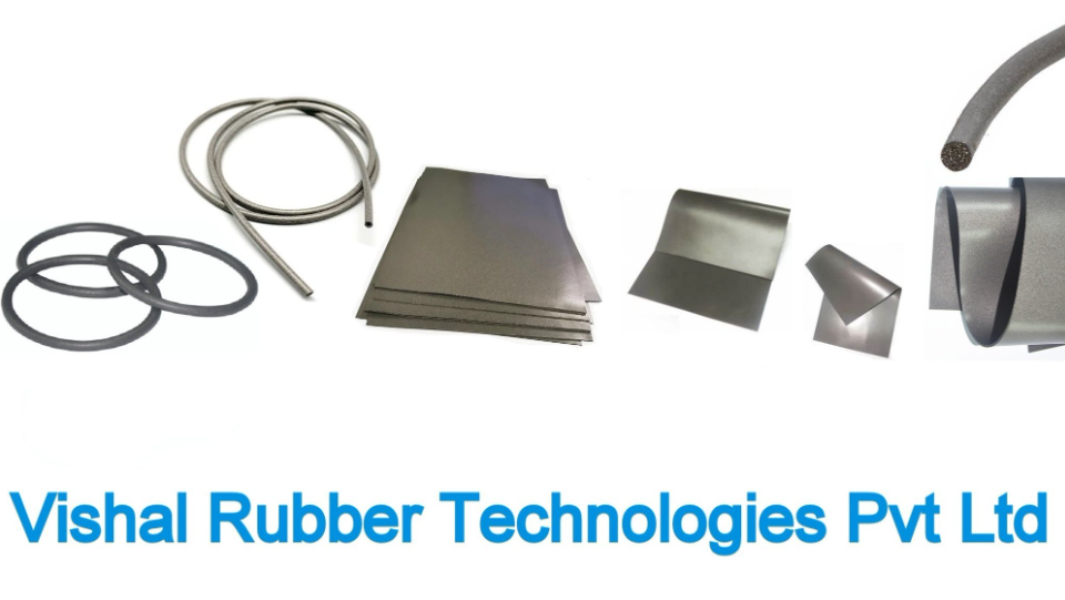
EMI RFI silicone rubber components are designed to support electromagnetic compatibility in electronic and electrical equipment. They are commonly used to help seal gaps in enclosures through which electromagnetic energy may enter or escape.
EMI refers to electromagnetic interference, while RFI generally refers to interference within the radio-frequency portion of the electromagnetic spectrum. Both can affect sensitive devices, communication systems, measurement equipment and control electronics.
Pune’s expanding electronics, automotive, automation and defence-linked manufacturing sectors increasingly depend on reliable enclosure-level shielding. Conductive silicone components can help achieve this while also providing environmental sealing and mechanical flexibility.
How Conductive Silicone Components Work
Ordinary silicone is an electrical insulator. For EMI shielding applications, silicone is combined with conductive fillers. These fillers create electrical conductivity within the elastomer, allowing the component to maintain contact between conductive enclosure surfaces.
Depending on the application, fillers may include:
- Nickel-coated graphite
- Silver-coated aluminium
- Silver-coated copper
- Silver particles
- Other engineered conductive materials
Each filler system provides a different balance of conductivity, corrosion behaviour, weight and cost. The most conductive material is not automatically the most appropriate choice. It must also be compatible with the enclosure metal and operating environment.
Common Component Formats
Conductive silicone can be processed into several forms to suit equipment design.
Extruded Gaskets
Extruded profiles are installed around enclosure doors, access panels and covers. They can be produced in solid, hollow and specialised cross-sections.
Moulded Components
Moulded parts are suitable for complex geometries, connector interfaces, equipment housings and applications requiring integrated sealing features.
Die-Cut Gaskets
Sheets can be converted into flat gaskets with cut-outs for fasteners, connectors and ventilation areas. This format is useful for panel interfaces and compact assemblies.
Conductive O-Rings
O-rings may be used where a circular seal must provide both environmental protection and conductive continuity.
Applications in Pune’s Engineering Ecosystem
EMI RFI silicone rubber components are relevant to industries operating throughout Pune, Pimpri-Chinchwad, Bhosari, Chakan and nearby Maharashtra manufacturing corridors. Typical uses include:
- Automotive electronic control units
- Industrial automation panels
- Telecom equipment
- Medical electronics
- Aerospace assemblies
- Defence equipment
- Power electronics
- Test and measurement systems
- Railway electronics
- Communication enclosures
The component’s role varies by product. In an automotive control unit, it may need to tolerate vibration and temperature cycling. In outdoor telecom equipment, it may also require resistance to moisture, ozone and weather exposure.
Design Factors That Affect Performance
Effective shielding requires more than selecting a conductive rubber grade. Designers should consider:
- Required shielding effectiveness across the relevant frequency range
- Enclosure material and surface coating
- Available compression force
- Gasket cross-section and contact area
- Operating temperature
- Exposure to moisture, oils and chemicals
- Compression set requirements
- Galvanic corrosion risk
- Dimensional tolerances
- Applicable environmental and material standards
A gasket needs sufficient compression to create continuous electrical contact. Excessive compression can damage the component, while inadequate compression can leave discontinuities that reduce shielding performance.
Vishal Rubber Technologies develops EMI RFI silicone rubber components for equipment manufacturers and engineering buyers in Pune. Drawings, application details and required test parameters help determine an appropriate compound and manufacturing process.
Design validation should include testing at assembly level because actual shielding performance depends on the complete enclosure. Surface finish, fastener spacing, flange rigidity, cable entry points and ventilation openings can all influence the result.
Early coordination between enclosure designers, electronics engineers and component manufacturers can prevent late-stage fitment problems. When conductive material selection and mechanical design are considered together, EMI RFI sealing becomes a planned part of the product architecture rather than a corrective measure introduced after interference is detected.