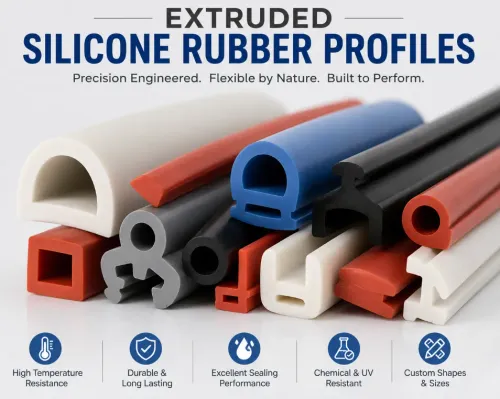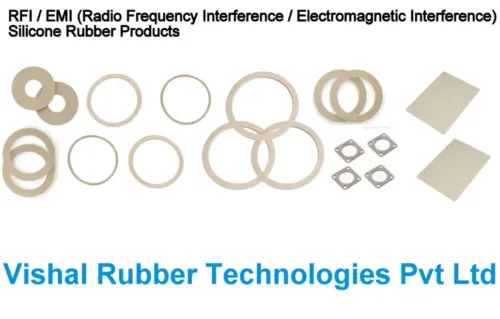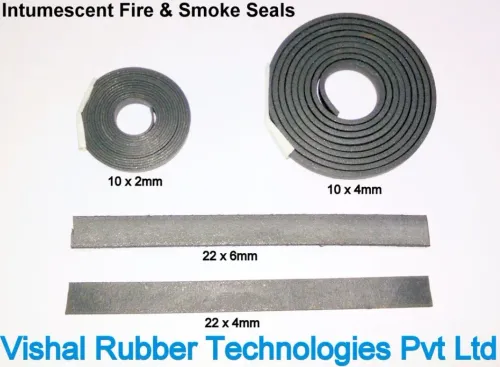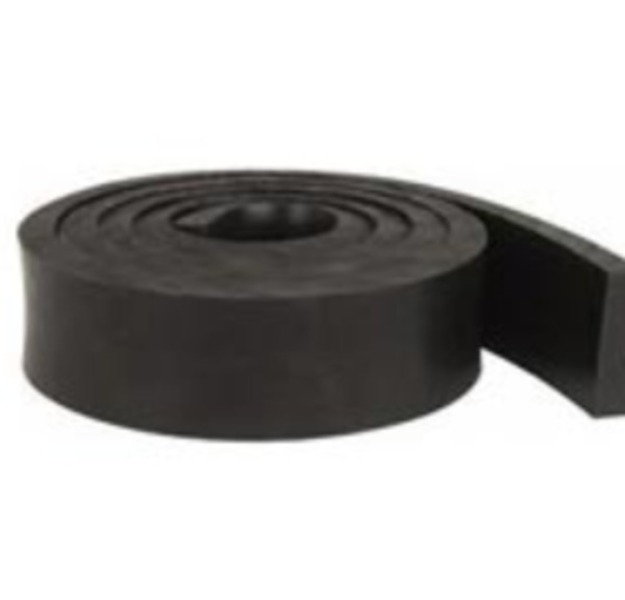
Fire Retardant Rubber Strips can be used in equipment where a simple strip geometry must also satisfy a defined fire-performance requirement.
Applications can include electrical assemblies, transport equipment, industrial enclosures, machinery, specialised OEM products.
For purchase managers in Pune, Maharashtra, the challenge is ensuring that the strip supplied matches both the drawing plus the required material performance.
Several avoidable mistakes can create problems during qualification.
Mistake 1 Asking Only for a Flame-Retardant Strip
Flame retardant is too broad for many technical purchasing situations.
Different projects can require different classifications.
The enquiry should state the exact standard plus classification specified by the design team.
Without this information, a manufacturer cannot reliably determine whether a proposed material meets the intended requirement.
Mistake 2 Leaving Thickness Out of the Discussion
Thickness can be relevant to fire-test classification plus component behaviour.
A buyer should therefore provide the actual strip thickness required by the drawing.
Do not treat thickness merely as a commercial variable used to calculate price.
It can influence fitment, compression, mechanical performance, applicable fire-test evidence.
Mistake 3 Ignoring the Strip's Normal Function
A strip may provide cushioning, spacing, sealing, insulation, vibration control.
The fire requirement does not eliminate these everyday functions.
Engineers should still define hardness, dimensions, environmental exposure, temperature, compression requirements.
A material that satisfies a fire classification but fails mechanically in the assembly does not solve the application.
Mistake 4 Using Approximate Dimensions
A request such as approximately 25 mm wide can create problems for repeat production.
Specify
Width
Thickness
Length
Tolerances
Hole pattern where applicable
Surface requirement
Quantity
If the strip fits into a channel, state the channel dimensions too.
Mistake 5 Treating Every Batch as a One-Off Purchase
OEM buyers should communicate expected repeat consumption.
This helps the manufacturer understand whether the requirement is a prototype, small production batch, recurring supply programme.
It can also influence production planning plus packaging.
Mistake 6 Reviewing Documentation Too Late
If project approval requires material documentation, ask about it before placing the production order.
Waiting until dispatch to request specialised evidence can delay internal inspection.
Supplier qualification should therefore include documentation requirements from the beginning.
Mistake 7 Selecting Mainly on Unit Price
The lowest quoted price can become expensive if the component fails approval, creates fitment problems, causes rework.
Industrial purchasing should evaluate the complete requirement material suitability, dimensions, consistency, documentation, production capability, delivery planning.
Price matters, but it should be compared against equivalent technical specifications.
Pune Procurement Context
Pune-based manufacturers supply automotive, railway, electrical, engineering, industrial equipment sectors where specialised elastomer strips may form part of larger assemblies.
Vishal Rubber Technologies Pvt. Ltd. lists rubber strips among its UL 94-related product capabilities, including multiple flammability classifications.
When approaching a manufacturer, buyers can improve response quality by attaching a drawing plus stating the applicable fire classification from the first enquiry.
Build a Better RFQ
A complete RFQ for Fire Retardant Rubber Strips should contain the material requirement, fire classification, width, thickness, length, quantity, application, service conditions, inspection expectations.
This creates a clearer basis for quotation plus sample evaluation.
Procurement efficiency improves when technical ambiguity is removed before commercial comparison begins. For specialised strips, precise specifications can reduce unnecessary sampling rounds, rejected components, production delays while helping engineering teams maintain the intended performance of the finished assembly.