Railway rolling stock uses numerous elastomer components for sealing, cushioning, vibration control, equipment protection. When these components are used in fire-sensitive areas, material selection may need to satisfy railway-specific fire performance requirements.
EN45545 HL3 Rated EPDM Rubber Products are relevant to projects where the applicable railway specification requires this level of fire performance.
For railway suppliers, metro contractors, engineering companies in Pune, Maharashtra, the key is understanding the project requirement before component sourcing begins.
Why EN 45545 Matters in Rail Projects
EN 45545 addresses fire protection requirements for railway vehicles.
Rail applications can involve enclosed passenger environments, electrical equipment, HVAC systems, cable areas, interior assemblies, external equipment.
Material behaviour under fire conditions therefore becomes part of the wider safety design.
The standard includes different requirement sets linked to product applications. Hazard levels reflect operating categories plus fire-safety considerations.
HL3 represents the highest hazard level within this framework.
R23 Is Relevant to Specific Sealing Applications
A railway component should not be sourced simply by asking for an EN 45545 material.
The applicable requirement set must be identified.
For certain sealing applications, R23 can be relevant. Engineering documentation should state the correct requirement set plus hazard level expected by the project.
This distinction matters because compliance language needs to correspond to the actual application.
Why EPDM Is Used in Rail Components
EPDM is widely used where environmental durability is important.
Depending on the compound formulation, EPDM can offer useful resistance to weathering, ozone, temperature exposure.
Rail components may experience outdoor conditions, repeated temperature changes, vibration, long service periods.
When a specially formulated EPDM compound also satisfies the required fire-performance classification, it can become suitable for selected rail sealing applications.
Typical Application Areas
Depending on the approved design, such material may be considered for components used around
Railcar HVAC systems
Cable entry areas
Equipment enclosures
Interior sealing points
Exterior sealing points
Vibration-control locations
Metro coach assemblies
Railway equipment interfaces
Actual suitability should be confirmed against the drawing plus project specification.
Documentation Should Come Before Purchase Approval
Railway procurement is documentation intensive.
Purchase managers should request relevant evidence during supplier evaluation rather than after production has started.
A technical sourcing package can include
Component drawing
Material requirement
EN 45545 requirement set
Required hazard level
Dimensions
Quantity
Operating environment
Inspection criteria
Required supporting documentation
This helps the manufacturer assess whether the proposed compound matches the project.
Avoid Generic Fire-Retardant Substitution
One of the most important purchasing principles is that a generic flame-retardant rubber should not automatically be substituted for a railway-specified material.
Rail standards contain defined test requirements. A material intended for another fire standard may not satisfy the railway requirement stated by the customer.
Procurement teams should preserve the exact project specification during RFQ evaluation.
Pune Support for Railway Supply Chains
Pune plus the wider Maharashtra industrial region supports railway suppliers, metro contractors, engineering businesses, fabrication companies, specialised component manufacturers.
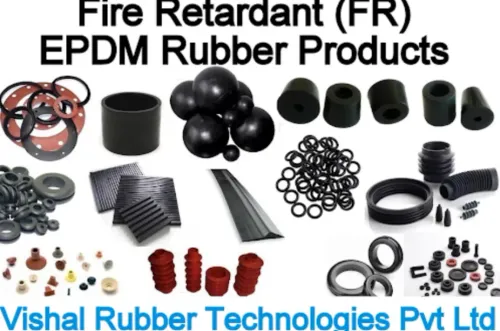
Vishal Rubber Technologies Pvt. Ltd. lists EPDM variants with EN 45545 HL3 fire-safety ratings for rail applications, including R23 sealing use. The company also lists custom extruded plus moulded configurations for relevant applications.
For project teams, the practical starting point is a drawing plus compliance requirement.
Build Compliance Into the Specification
EN45545 HL3 Rated EPDM Rubber Products should be evaluated as engineered components within a defined railway application.
Material identification, requirement set, hazard level, dimensions, operating environment, supporting test information all matter.
When these details are established early, procurement teams can communicate more effectively with manufacturers while maintaining clearer technical records through sample approval, supplier qualification, production purchasing.