Choosing an NACF gasket by pipe size alone can cause leakage when steam, chemicals, thermal cycling or flange-face geometry changes the joint conditions. By the end, you will be able to match non-asbestos compressed fibre gaskets to Pune process-plant services, identify unsuitable media, specify the flange correctly and prepare a supplier-ready purchase request.
Key takeaways
- Confirm the exact NACF sheet grade before checking pressure, temperature or chemical compatibility.
- Reject NACF when the process fluid exceeds the manufacturer’s chemical or temperature limits.
- State flange standard, facing, dimensions, thickness and service conditions in every enquiry.
- Control flange alignment, bolt loading, surface condition and retightening requirements during installation.
Which Pune process-plant services suit an NACF gasket?
Compressed fibre is a material family, not one universal grade. Aramid, cellulose and mixed-fibre sheets use different elastomer binders, so their pressure-temperature and chemical limits differ. NACF gasket applications for process plants in Pune must therefore start with the exact sheet data, not the label “non-asbestos.”
| Medium | Temperature | Pressure | Concentration | Cycling exposure | Grade or binder to confirm |
|---|---|---|---|---|---|
| Chilled/cooling water | Continuous plant range | Line rating | Water chemistry, glycol if used | Start-stop frequency | Water-compatible aramid, cellulose or EPDM-binder grade |
| Compressed air | Continuous and dew-point temperature | Receiver and line pressure | Oil carryover, moisture | Compressor cycling | Air-compatible grade; verify oxygen exposure |
| Hydrocarbons/oils | Actual continuous temperature | Design pressure | Fluid type and additives | Thermal starts/stops | Oil-resistant elastomer binder |
| Steam/hot water | Continuous plus wet-steam peaks | Design pressure | Boiler chemicals | High cycling | Steam-rated grade; verify relaxation |
| Dilute acids/alkalis | Actual temperature | Design pressure | Named concentration | Batch and cleaning cycles | Chemical-compatible binder |
| Solvents | Actual temperature | Design pressure | Solvent identity and mixture | Swelling exposure | Solvent-resistant grade |
| Slurry/wastewater | Temperature | Solids and pressure | Solids, pH, oxidisers | Abrasion and cycling | Grade confirmed for solids and chemistry |
Steam and thermal cycling reduce the usable envelope through relaxation and differential expansion. Treat hot water and thermal oil the same way; actual temperature, pressure and transients decide suitability. Confirm every entry for exact grade, continuous temperature, pressure, flange size and transient conditions.
A compressed fibre gasket for process equipment is a screening candidate, not an approval. ASTM F36 compression-and-recovery results compare materials; they are not flange pressure ratings.
When should you reject NACF for a process fluid?
Reject NACF when the exact binder and filler system has no documented compatibility with the process fluid. “Non-asbestos” means the reinforcement is asbestos-free; it does not make the elastomer binder chemically inert.
Screen non-asbestos gasket applications against the actual medium, concentration, temperature, pressure, exposure duration and mixture. A generic chemical-resistance chart is not enough.
| Medium or duty | Screening decision |
|---|---|
| Dilute acid or alkali, ambient utility water | Consider NACF only after grade confirmation |
| Caustic soda, sulfuric acid or hydrochloric acid | Reject for concentrated, hot or prolonged exposure unless documented |
| Sodium hypochlorite | Reject without specific oxidiser compatibility; binder attack can cause leakage |
| Solvents and oils | Confirm the exact solvent or oil; generic approval does not transfer |
| Oxygen service | Reject unless the grade, cleanliness and oxygen-service approval are documented |
| High-temperature wet service | Prefer a construction rated for heat, moisture and cycling |
A NACF gasket for process plant flanges may suit dilute, ambient utility service, but it is a poor default for concentrated acid, hot caustic, oxidising hypochlorite, aggressive solvents or high-temperature wet service. Choose PTFE for broader chemical inertness; choose EPDM for selected water and aqueous duties within its chemical and temperature range.
Choose expanded graphite for high-temperature service, or spiral-wound, graphite-filled metallic, metal-inlay or RTJ construction when pressure, fire performance or blowout resistance controls the decision.
Pharmaceutical and food plants need separate verification of product-contact documentation, extractables, cleaning chemicals, sanitisation cycles, traceability and hygienic-design requirements. A general industrial grade is not automatically acceptable.
How do you specify NACF dimensions, flange standards and facing?
Specify the joint, not just “NACF gasket, 100 NB.” A familiar nominal size does not guarantee the same bolt circle, bolt-hole pattern or sealing land across flange standards.
State all of these details in the enquiry:
- Nominal pipe size; pressure class or PN rating; flange standard and exact table, class or dimensional drawing.
- Facing type, bolt circle, bolt-hole count and diameter, inner diameter, outer diameter and finished thickness.
ASME B16.21 covers nonmetallic flat gaskets for pipe flanges. EN 1514-1 covers nonmetallic flat gaskets for PN-designated flanges. For ASME, BS 10, IS 1538 or IS 6392 patterns, name the exact table or class; otherwise supply the flange drawing. This is essential for reliable NACF flange sealing.
Facing determines the cut pattern and load path:
| Facing | Gasket arrangement | Sealing result |
|---|---|---|
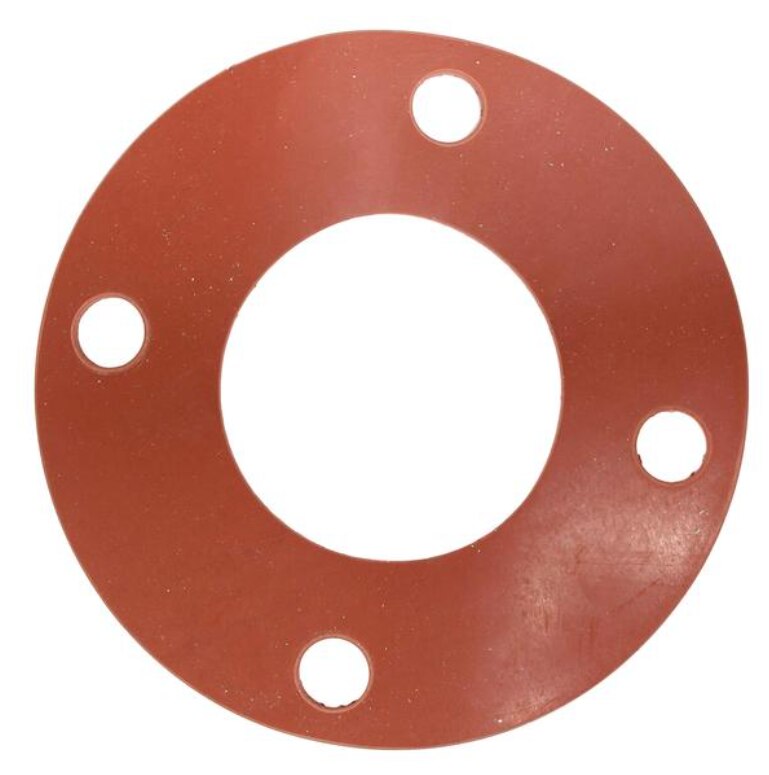
| Flat-face | Full-face gasket covers the bolt holes | Seals across the complete flat flange |
| Raised-face | Ring gasket seals on the narrow raised ring | Concentrates load on the raised face |
| Mismatched facing | Gasket does not match the flange land | Can uncover the seal, overstress the gasket or distort the flange |
A NACF gasket for process plant flanges must sit centrally without bolts forcing it into position. Do not pull an off-centre gasket into alignment with bolt tightening. Keep the inner diameter from intruding excessively into the bore, where it can disturb flow or shed material.
Which operating and installation details determine NACF sealing life?
A gasket can match the fluid and still leak when it loses assembly stress. NACF flange sealing depends on the exact grade sheet stating maximum continuous temperature, pressure, minimum assembly stress, recovery, creep relaxation, sealability, thickness and flange-surface requirements for that compressed fibre gasket for process equipment.
Treat continuous temperature separately from start-up, shutdown, wet-steam and upset excursions. Thermal cycling accelerates relaxation and flange movement. Flange size matters too: larger joints need greater bolt load and are more vulnerable to rotation and uneven compression.
Do not select torque from gasket size alone. Bolt material and condition, lubrication, flange stiffness, gasket properties, target assembly stress and joint design determine the required load.
Install in this order:
- Inspect both faces for damage, distortion and excessive roughness.
- Clean the joint and confirm bolt condition, threads and washers.
- Lubricate bolts only with the specified lubricant.
- Centre the gasket without forcing it into position with bolts.
- Tighten in a cross-pattern through staged passes, then verify the final tightening pattern.
- Do not reuse a compressed gasket.
Store stock flat, dry and covered, away from heat, sunlight, ozone, oils and solvents. Reject sheets showing hardening, cracking, swelling, edge damage or permanent deformation.
ASTM F37 and ASTM F146 provide comparison data, not complete plant approvals or pressure ratings. Confirm the manufacturer’s grade sheet before installation.
| Aspect | Why it affects life | Check |
|---|---|---|
| Temperature | Excursions increase relaxation | Continuous and transient limits |
| Surface | Roughness prevents sealing | Manufacturer’s specified finish |
What should a Pune buyer put into the NACF gasket enquiry?
A verifiable enquiry turns NACF gasket applications for process plants in Pune into a defined joint, not a request for a generic non-asbestos gasket. Send the supplier these plant details:
- Medium and composition; concentration; normal and maximum temperature; pressure; vacuum; flow direction; and start-up, shutdown and upset cycles.
- Flange nominal size; standard and exact table; pressure class or PN rating; facing; bolt circle, hole count, hole diameter and bolt size; gasket inner and outer dimensions; finished thickness; quantity; and required delivery condition.
- Exact NACF sheet grade, binder or fibre description, continuous and transient operating limits, chemical-compatibility statement, minimum assembly stress, inspection records, batch or lot traceability and a dimensional drawing.
| Enquiry field | What to provide | What to verify |
|---|---|---|
| Service | Fluid composition, concentration, temperature and pressure | Compatibility for duration, mixtures and excursions |
| Joint | ASME, EN, BS 10, IS 1538 or IS 6392; size, class or PN; facing | Drawing matches bolt pattern and sealing land |
| Assembly | Bolt data, thickness and flange condition | Minimum assembly stress and surface requirements |
| Supply | Quantity and delivery condition | Inspection report and lot traceability |
For pharmaceutical and food plants, add product-contact compliance, extractables or leachables data, cleaning-chemical compatibility, sanitisation-cycle evidence, traceability and hygienic-design documents. These non-asbestos gasket applications need separate approval from ordinary utility service.
Vishal Rubber Technologies Pvt. Ltd. is most useful when it converts the packet into a grade-and-dimension confirmation. Compare its drawing and data sheet with the plant flange standard and service conditions; obtain engineering approval for steam, oxidisers, concentrated chemicals, oxygen, and high-pressure or high-temperature joints.
Related products
 | Gaskets Non-asbestos fiber mixed with heat/chemical resisting rubber binder, then rolled and vulcanized. View product → |
 | Gaskets Non-Asbestos Compressed Fibre Gaskets NACF We are one of the largest manufacturers of Gaskets in India. All types of Standard and Non-Standard Gaskets are manufactured. View product → |
Frequently asked questions
Which Pune process-plant services suit an NACF gasket?
NACF suits process services only when the selected compressed-fibre grade’s temperature, pressure and chemical-resistance data match the fluid and flange duty.
When should you reject NACF for a process fluid?
Reject NACF when the exact sheet grade lacks compatibility data, or when the fluid, temperature, pressure, cycling or leakage risk exceeds its stated limits.
How do you specify NACF dimensions, flange standards and facing?
Give the nominal pipe size, pressure class, flange standard, gasket inside and outside diameters, thickness, facing type and bolt-hole details.
Which operating and installation details determine NACF sealing life?
Fluid composition, temperature and pressure cycling combine with flange alignment, surface finish, bolt load, compression and installation procedure to determine sealing life.
What should a Pune buyer put into the NACF gasket enquiry?
Include the service fluid, concentration, operating and design temperatures, pressure, flange standard, facing, dimensions, quantity, delivery requirements and requested material documentation.