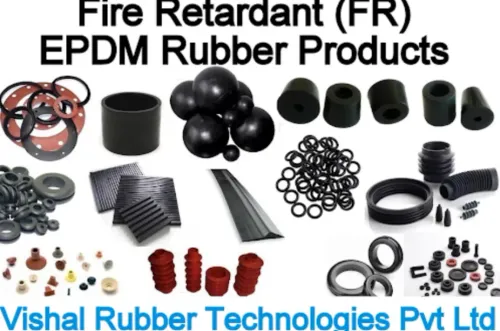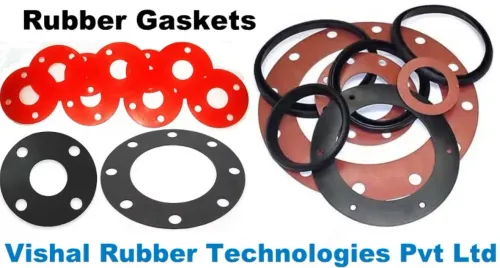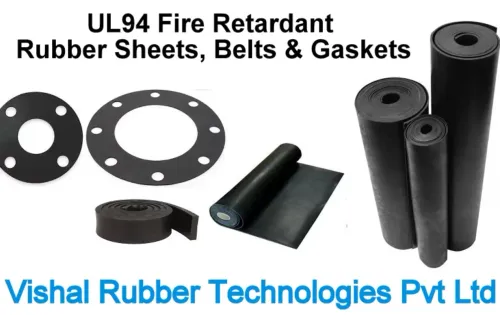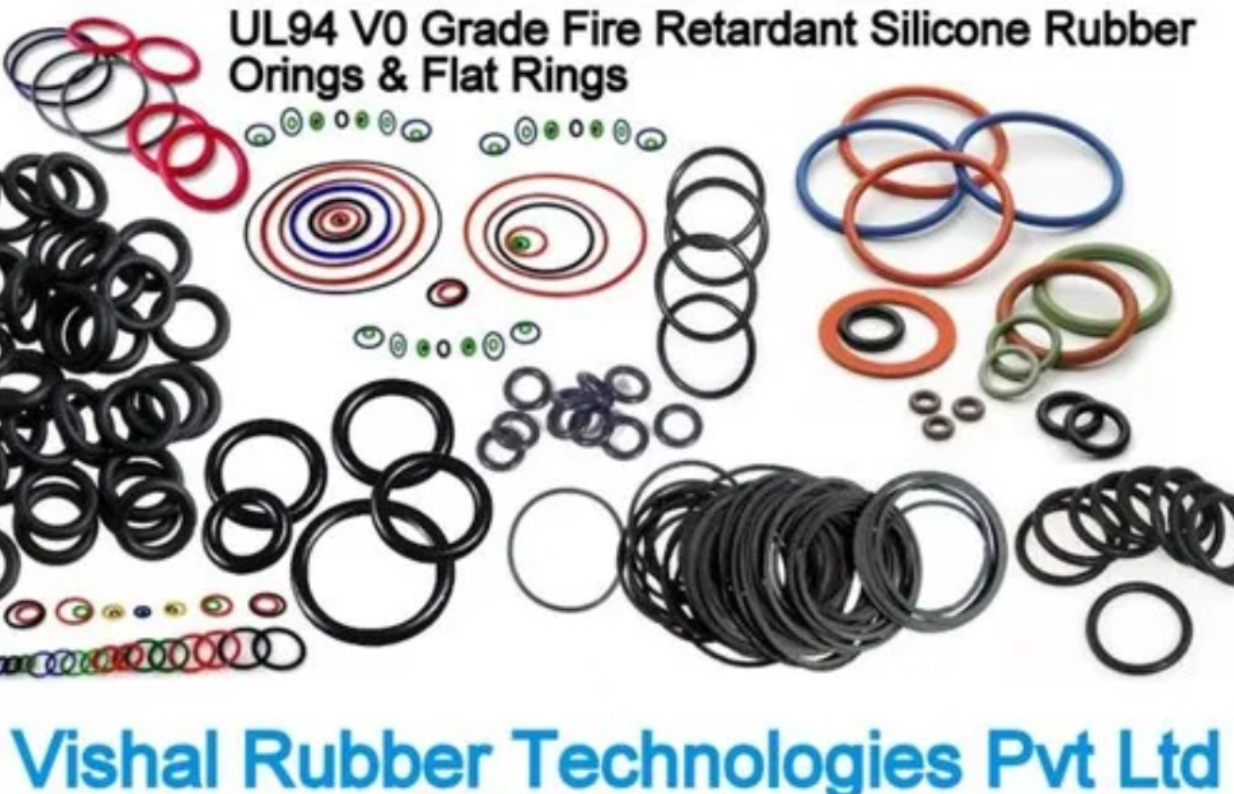
UL94 V0 Grade Rubber Products are commonly considered when designers require defined flammability behaviour from elastomer components used in electrical, electronic, industrial equipment applications.
The term V0 should not be treated simply as a marketing description. It refers to a classification achieved under specific test conditions.
For OEM procurement teams in Pune, Maharashtra, understanding the meaning behind the classification helps create clearer purchase specifications.
What Does V0 Indicate?
UL 94 includes flammability classifications used to evaluate how plastic materials behave when exposed to a controlled ignition source.
V0 is one of the vertical burning classifications.
Under the relevant test method, specimen behaviour is evaluated according to defined criteria such as burning time plus flaming particle behaviour.
This means a V0 request should be connected to the material, thickness, relevant test conditions.
A buyer should not assume that every component described as fire retardant automatically satisfies V0 requirements.
Why Equipment Manufacturers Specify V0
Rubber components may be installed near electrical circuits, wiring, power systems, control equipment, enclosed assemblies.
Designers can specify particular flammability performance when component behaviour during fire exposure forms part of the product safety strategy.
Possible applications include
Electrical enclosures
Electronic assemblies
Control equipment
Industrial panels
Cable sealing areas
Appliance components
Machinery
Specialised OEM equipment
The final selection depends on the product design plus applicable compliance requirements.
Do Not Separate Classification From Thickness
Thickness is an important procurement detail.
When requesting a component with a defined flammability classification, buyers should identify the component thickness shown in the approved drawing.
Test documentation should be reviewed against the actual project requirement rather than relying only on a product name.
This is particularly relevant during supplier qualification.
Mechanical Performance Still Matters
A flammability classification does not replace the normal engineering evaluation required for an elastomer component.
The component may also need appropriate
Hardness
Tensile properties
Elongation
Compression behaviour
Temperature resistance
Environmental resistance
Dimensional tolerance
A gasket that meets a fire requirement but performs poorly under compression would still be unsuitable for a sealing application.
The complete specification must therefore reflect the actual job the component performs.
What Procurement Teams Should Send
A well-prepared request for quotation can save several rounds of technical clarification.
Include
Component drawing
Required dimensions
Thickness
Required V0 classification
Application description
Operating temperature
Quantity
Expected annual volume
Documentation requirement
If the component is part of an existing approved assembly, mention any restrictions on material changes.
Review Evidence Carefully
Supplier evaluation should focus on whether the proposed material corresponds with the project requirement.
Ask which material was tested, what thickness applies, what classification was achieved, what supporting documentation is available.
This creates a clearer technical trail for internal engineering plus supplier-quality teams.
Sourcing in Pune
Pune supports a dense network of electrical, automotive, engineering, industrial equipment, OEM manufacturing businesses. Local access to specialised component manufacturing can be useful during prototype development plus production scaling.
Vishal Rubber Technologies Pvt. Ltd., based in Pune, lists UL 94 EPDM sheets, gaskets, belts, strips across multiple UL 94 classifications, including V0.
For purchase managers, this makes the initial technical enquiry particularly important. A statement such as need V0 rubber leaves several variables unresolved. A drawing plus thickness plus application data creates a much stronger sourcing request.
Focus on Traceable Requirements
UL94 V0 Grade Rubber Products should be purchased through specification-driven evaluation.
The classification, component thickness, mechanical requirements, service environment, quality documentation should be considered together.
This approach helps engineering teams avoid choosing a material based solely on a familiar certification term.
When a fire-related classification matters to the finished equipment, procurement documentation should make that requirement visible from the first enquiry through sample approval into production supply.