Thank you for writing to us. One of our executive will reach back to you through your submitted medium. In case there’s an urgency, feel free to connect over WhatsApp for faster response.
Prefer calling? Dial +918048036916 (International callers) or 8048036916 (Indian callers).
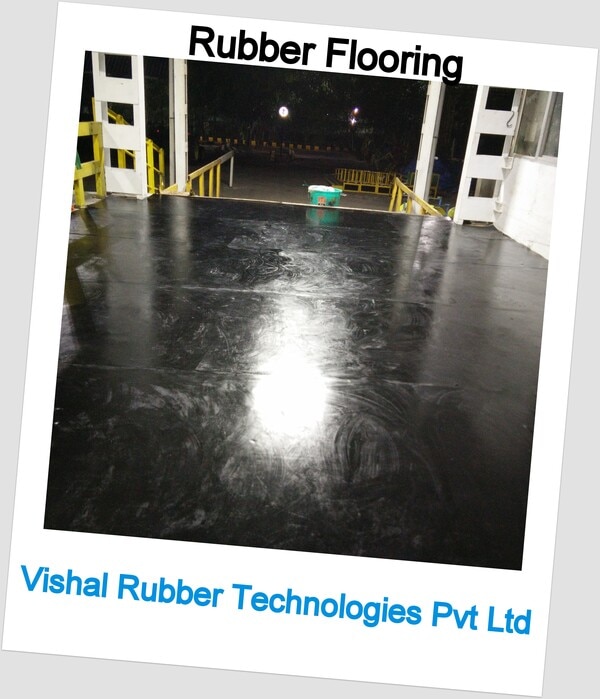
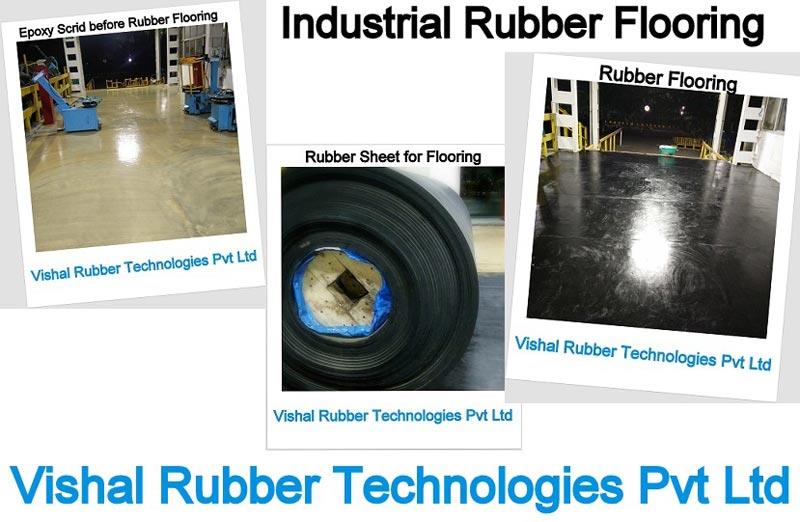
Rubberized Flooring using Conveyor Belts for better rigidity and longer life instead of usual Rubber Mats. Usually Conveyor belt used is 5mm thk with 2 ply fabric inserted for wear and tear resistance. Rubber Sheets used can be of higher thickness as per Customer requirements. Process involves following steps: 1. Epoxy Scridding for leveling uneven surfaces. 2. Application of Rubber Conveyor Belts to the Epoxy Scrid floor using specially developed primer and epoxy bonding agent. 3. Filling of Gaps between the Conveyor Belts.
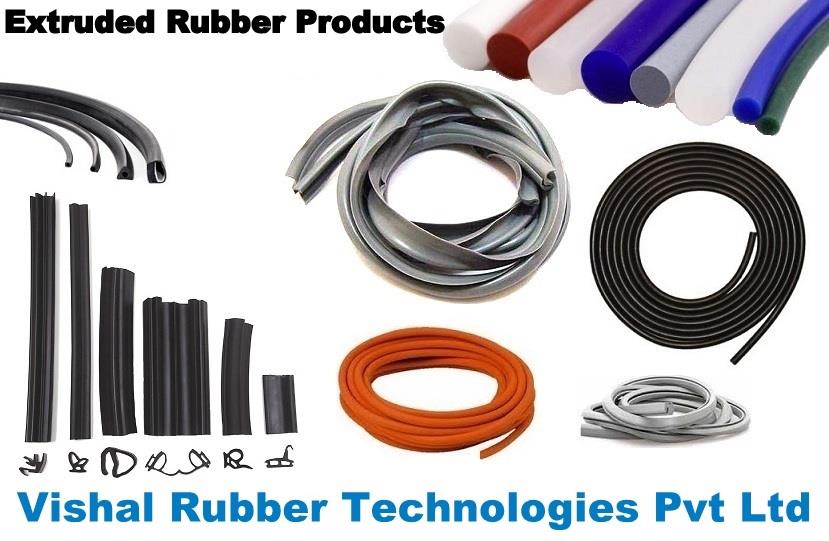
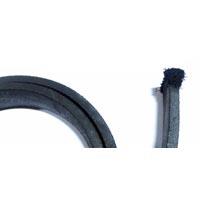
We offer a comprehensive range of extruded Rubber Chords for all applications. These are available in many compounds including Nitrile / Buna-N (NBR), Fluorocarbon (Viton®, Fluorocarbon (FKM), Silicone (VMQ), Fluorosilicone (FVMQ), Natural Rubber (NR), Ethylene Propylene (EPDM), Hydrogenated Nitrile Rubber (HNBR), Styrene Butadiene Rubber (SBR), Chloroprene (Neoprene®), etc. Whether you require just a few meters or much larger quantities we will be delighted to quote for your requirement.
Extruded rubber products will differ from moulded rubber products based on the process where extruded parts are forced through a die of the required cross section under pressure of an extruder. Often extruded products are unvulcanized prior to being extruded, leaving the rubber in a soft and pliable state post extrusion. If this is indeed the case, the finished extruded products will normally need to be vulcanized before they are rendered usable.
The extrusion process begins with the unvulcanized rubber compound being fed into the extruder. Next, the flutes of the revolving screw will begin to carry the rubber forward into the die, with an increase in pressure and temperature occurring as the material gets closer to the die itself. Once it reaches the die, the built up pressure forces the material through the openings, where it will consequently swell in various degrees based on the material compound and hardness. Because of this tendency towards swelling, many extruded parts require plus or minus tolerances on their cross sections. During the vulcanization, the extruded rubber will well or shrink in both its cross section and its length depending on the type of rubber compound used. After vulcanization, a length of rubber extrusion will tend to be reduced in dimension more in the center of the length than in the ends.
Tri – Clamp / Tri – Clover Gaskets:
A Tri Clover Compatible Clamp and Gasket along with a pair or Tri Clover fittings is required to make a complete connection. Tri clover Tri clamp gaskets in four different materials:
Silicone: Silicone gaskets have a very wide temperature range of -58ºF to 446ºF making them suitable for a wide range of applications and great for home brewing locations where they will be near flame or in heat wash. They are very flexible and relatively soft making them easy to work with and seal. They can get gummy over time when used with strong acids and caustics in commercial applications. Silicone brewery gaskets are translucent clear.
EPDM: EPDM gaskets have a narrower temperature range than silicone (-30ºF to 300ºF) but stand up to stronger acids and caustics than silicone making them more desirable in commercial applications and excellent for home brewery applications. EPDM gaskets are relatively soft, easy to seal and probably the best all around choice for any application that doesn't need to live close to a flame source. EPDM gaskets are black.
PTFE: PTFE Teflon gaskets have the widest temperature range (-100ºF to 500ºF) and are also the hardest making them ideal for locations that need to rotate against each other like racking arms. (Never rotate or loosen a connection that is holding back hot liquid!) Being hard, they are somewhat more difficult to get a good seal. PTFE gaskets are solid white.
BUNA-N: BUNA-N gaskets have a fairly narrow temperature range (-30ºF to 200ºF) but remain flexible across that range and seal well. They do not do well with acid or caustic cleaners and should be kept away from UV light where they can oxidize. BUNA-N gaskets are a good choice for the fermentation side of a brewery where their low cost makes them nearly disposable. Black in color.
NEW! We just recently added flanged tri clover tri clamp gaskets to our line. We have manufactured these gaskets having a thin flange around the outer circumference of the gasket. This flange holds the gasket in place on one of the two fittings which makes for much easier handling and connection.
Rubber To Metal Bonded Part is a means by which rubber is mechanically bonded to a metal insert during the molding process. To begin the bonding process, the inserts are first prepped for production using a degreasing system to rid the parts of any contaminants before the adhesive is applied. Next, the heat activated adhesive is applied to the inserts using a technique similar to spray painting. Once the metals are prepared, they are ready for production.
The inserts are then physically placed, one at a time, into each cavity of the mold. For inserts on the top of a part, special magnets are incorporated into the mold to hold them in place while the mold is being loaded. Also, for inserts being encapsulated into the rubber, special chaplet pins are incorporated into the mold to suspend the insert in the mold & allow the rubber to flow around the metal.
Once the inserts are in place, the normal rubber molding process commences. After the mold is closed, and the molding begins, the adhesive on the metals is activated, allowing the inserts to bond to the rubber.
Typical applications for rubber to metal bonding include, any part requiring the combination of the flexibility of rubber and the stability of a metal. Components ranging in size from small mounts for motors to large locomotive suspension parts are just a sampling of parts produced using this process.
Rubber can be bonded with metal using more than 15 polymers including: Nitrile / Buna-N (NBR), Fluorocarbon (Viton®, Fluorocarbon (FKM), Silicone (VMQ), Fluorosilicone (FVMQ), Polyurethane (AU/EU), Natural Rubber (NR), Ethylene Propylene (EPDM), Hydrogenated Nitrile Rubber (HNBR), Styrene Butadiene Rubber (SBR), Chloroprene (Neoprene®), etc.
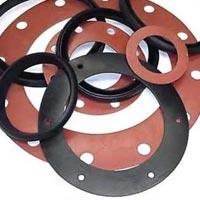
We offer different types of Industrial Rubber Gaskets used according to purpose and type. Some of the gaskets are Flange and Ring Type Gaskets followed by standards such as ANSI, BS10TD, T-5, T-17, T-11, IS-1538, IS-6392, Body Gaskets, etc.
These gaskets are also manufactured from over 15 polymers including: Nitrile / Buna-N (NBR), Fluorocarbon (Viton®, Fluorocarbon (FKM), Silicone (VMQ), Fluorosilicone (FVMQ), Polyurethane (AU/EU), Natural Rubber (NR), Ethylene Propylene (EPDM), Hydrogenated Nitrile Rubber (HNBR), Styrene Butadiene Rubber (SBR), Chloroprene (Neoprene®), etc.
Key: Rubber Gaskets, Rubber Gaskets in Pune, Rubber Gaskets in Maharashtra, Rubber Gaskets in India, Moulded Rubber Gaskets, Rubber Moulded Gaskets, Gaskets.
In the calendering process, fabric and rubber material is passed through a series of rollers to flatten, smooth and commingle the two or more materials. Calendered sheets can have multiple layers of both the elastomeric and polymer “sandwiched“ together.
Sheeting produced by the calender process is typically divided into two classes: either fabric inserted, or unsupported. Unsupported calender goods contain only layers of rubber or plastic that have been joined without cord, cloth or textile being inserted for strength or tear resistance. Tire cord can be used special cases; rayon, cotton, nylon, or polyester cords are arranged in parallel and bound together by rubber on a calender.
Depending upon intended use and required look or feel, the sheets of rubberized fabric are then smoothed, glazed, polished, or given a moiré or embossed surface. The resulting surface characteristics depend on the pressure exerted by the rollers, on their temperature, composition, and surface designs, and on the type of coating or glaze previously applied to the material to be calendered. Following the calendering process the material is then wound into rolls and placed into storage.
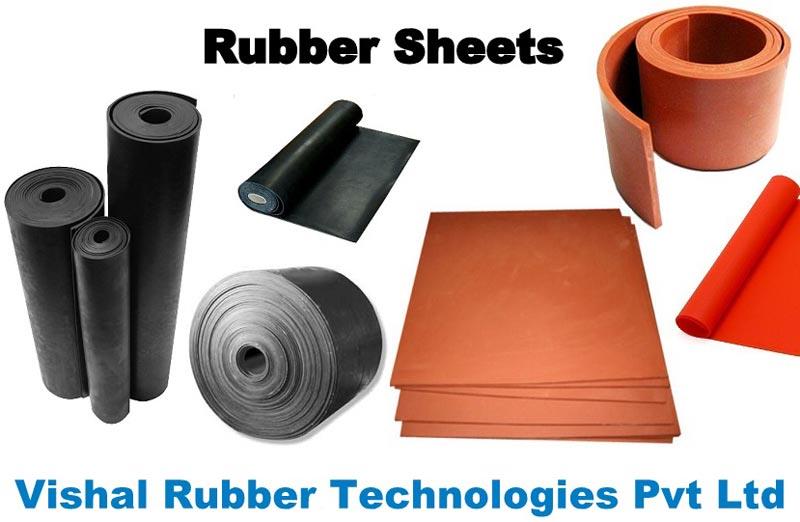
These Rubber Sheets are also manufactured from over 15 polymers including: Nitrile / Buna-N (NBR), Fluorocarbon (Viton®, Fluorocarbon (FKM), Silicone (VMQ), Fluorosilicone (FVMQ), Polyurethane (AU/EU), Natural Rubber (NR), Ethylene Propylene (EPDM), Hydrogenated Nitrile Rubber (HNBR), Styrene Butadiene Rubber (SBR), Chloroprene (Neoprene®), etc.
Extruded rubber products will differ from moulded rubber products based on the process where extruded parts are forced through a die of the required cross section under pressure of an extruder. Often extruded products are unvulcanized prior to being extruded, leaving the rubber in a soft and pliable state post extrusion. If this is indeed the case, the finished extruded products will normally need to be vulcanized before they are rendered usable.
The extrusion process begins with the unvulcanized rubber compound being fed into the extruder. Next, the flutes of the revolving screw will begin to carry the rubber forward into the die, with an increase in pressure and temperature occurring as the material gets closer to the die itself. Once it reaches the die, the built up pressure forces the material through the openings, where it will consequently swell in various degrees based on the material compound and hardness. Because of this tendency towards swelling, many extruded parts require plus or minus tolerances on their cross sections. During the vulcanization, the extruded rubber will well or shrink in both its cross section and its length depending on the type of rubber compound used. After vulcanization, a length of rubber extrusion will tend to be reduced in dimension more in the center of the length than in the ends.
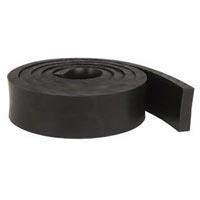
Rubber Strips are both manufactured in Moulding and Sheet Cutting according to the requirement. These are basically used in all types of industries depending on the purpose.
Rubber Strips are also manufactured from over 15 polymers including: Nitrile / Buna-N (NBR), Fluorocarbon (Viton®, Fluorocarbon (FKM), Silicone (VMQ), Fluorosilicone (FVMQ), Polyurethane (AU/EU), Natural Rubber (NR), Ethylene Propylene (EPDM), Hydrogenated Nitrile Rubber (HNBR), Styrene Butadiene Rubber (SBR), Chloroprene (Neoprene®), etc.
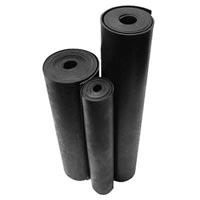
All types of Natural, EPDM, Nitrile, Neopren, Silicon etc Rubber Sheets available.
In the calendering process, fabric and rubber material is passed through a series of rollers to flatten, smooth and commingle the two or more materials. Calendered sheets can have multiple layers of both the elastomeric and polymer “sandwiched“ together.
Sheeting produced by the calender process is typically divided into two classes: either fabric inserted, or unsupported. Unsupported calender goods contain only layers of rubber or plastic that have been joined without cord, cloth or textile being inserted for strength or tear resistance. Tire cord can be used special cases; rayon, cotton, nylon, or polyester cords are arranged in parallel and bound together by rubber on a calender.
Depending upon intended use and required look or feel, the sheets of rubberized fabric are then smoothed, glazed, polished, or given a moiré or embossed surface. The resulting surface characteristics depend on the pressure exerted by the rollers, on their temperature, composition, and surface designs, and on the type of coating or glaze previously applied to the material to be calendered. Following the calendering process the material is then wound into rolls and placed into storage.
Silicone rubber has historically been used in specialty applications in order to meet requirements other elastomers cannot. Silicones have the largest application temperature span of all rubbers (-120 F to 500 F, with one or two exceptions where highly specialized and costly Fluoropolymers can compare).
Their chemical structure allows Silicones to be the most benign of all rubbers in medical applications (again, the exception are some very costly Fluoroelastomers). Cytotoxity tests of Silicone parts made with simple formulations show no adverse effects.
The US military applies the longest shelf life criteria to Silicone rubber components. For example, a coolant hose made with Silicone meeting SAE J20, is given a shelf life of 20 years, whereas those made with chloroprene rubber meeting SAE J20 are given a shelf life of 8 years.
The benign nature of this rubber makes components made with Silicone ideal for electronic applications, where long life and chemical inertness are essential to good electrical integrity over the component’s life. Silicone rubber parts can be made extremely conductive (resistivity of 0.0001Ω cm) or highly insulative (resistivity of 1015Ω cm).
In the automotive components market Silicone rubber has found major utilities in break line components, electrical grommets, radiator hoses, fuel line check valves (Fluorosilicone) and Oil Pan and Rocker Cover gaskets, as well as Spark Plug boots. It is estimated that in a modern car, 25% of the rubber components (excluding tires) are made of Silicone rubber
It is mostly used in Food packaging machinery, Conveyor belting industry, Electronic component manufacturing companies, PCB Panel manufacturing industry, etc.
Rubberized Flooring using Conveyor Belts for better rigidity and longer life instead of usual Rubber Mats. Usually we use Conveyor belting of 5mm thk with 2 ply fabric inserted for wear and tear resistance. Rubber Sheets used can be of higher thickness as per Customer requirements.
Process involves following steps :
Epoxy Scridding for leveling uneven surfaces.
Application of Rubber Conveyor Belts to the Epoxy Scrid floor using specially developed primer and epoxy bonding agent.
Filling of Gaps between the Conveyor Belts.